articles / Hosts
Lunar New Year in the Concert Hall
February 17, 2026 marks the arrival of the Lunar New Year and the beginning of the Year of the Horse. In Chinese culture, the horse is a symbol of independence, growth, and free spiritedness, qualities littered all across the classical canon.
Galloping into the new year, a handful of composers wrote music now widely associated with equestrian swiftness and determination. Like Rossini’s William Tell Overture, famously used as the theme music for The Lone Ranger.
Or Franz Liszt’s virtuosic showpiece, Grand galop chromatique, which would often end his public concerts.
And the notorious right-hand technique required to play the nighttime horseback ride of Schubert’s lied “Erlkönig,” which makes or breaks the aspiring collaborative pianist.
The classical music canon wasn’t formed overnight. It emerged through centuries of repetition, shaped by ritualized practice and performance. Composers returned to the same musical ideas, hearing familiar melodies again and again and making small adjustments over time. Across generations, those incremental changes accumulated, forming traditions that gained momentum and eventually defined the repertoire.
Both Lunar New Year and classical music are tied to continuity and renewal. The same pieces return year after year, and familiarity is part of their appeal. There’s a reason you don’t turn off the radio when a favorite piece comes on. But hearing something familiar can feel new, depending on when and how you hear it.
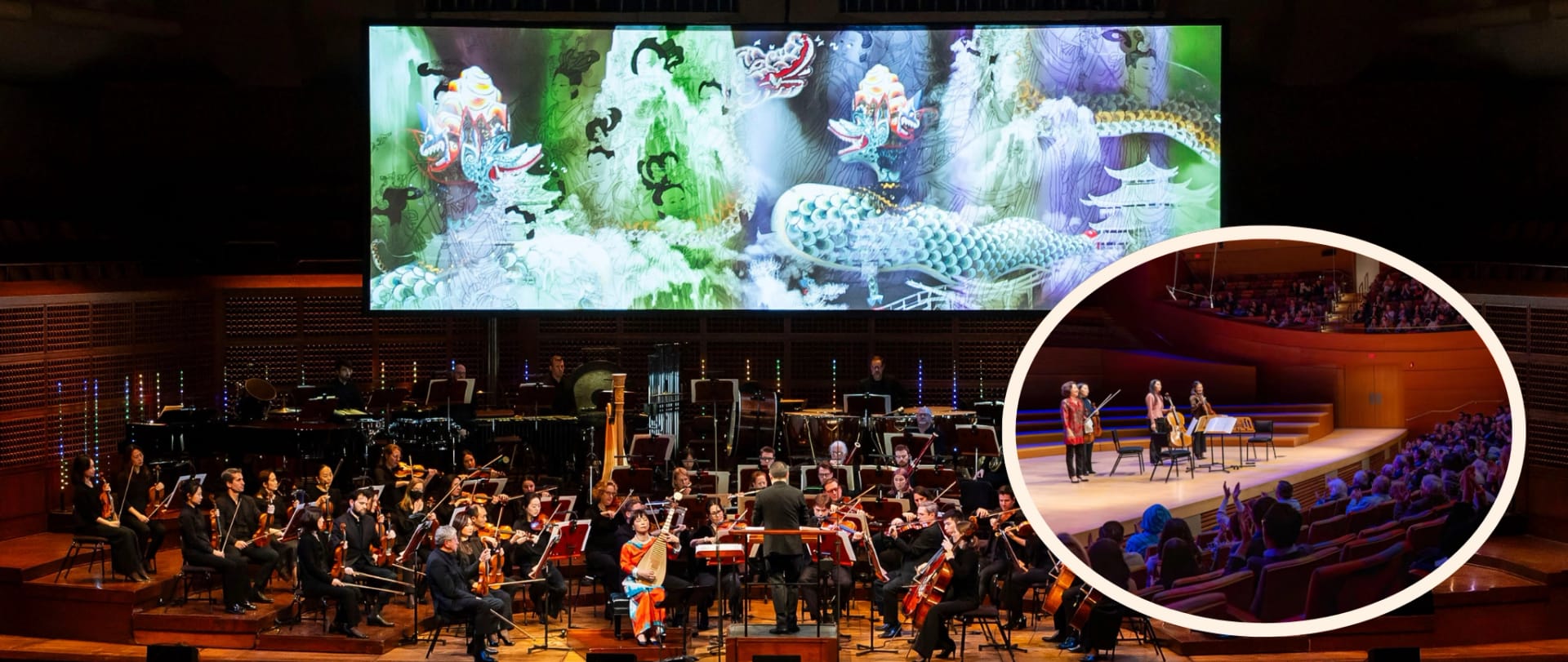
In recent years, major California institutions and regional orchestras throughout the state have made Lunar New Year programming a recurring part of their seasons. On Tuesday, February 10, 2026 at 8:00 PM, the Los Angeles Philharmonic is celebrating Lunar New Year with chamber music performed by members of the orchestra . On February 28, 2026, the San Francisco Symphony draws upon Asian traditions, past and present, in a celebration of music and community.
For those who prefer to celebrate more quietly at home, YouTube performances offer an immediate and accessible entry point. Tan Dun is a Chinese-born American composer and conductor whose music draws from a variety of Western and Chinese influences, making his music a natural companion to Lunar New Year listening.
Bright Sheng, another Chinese-born American composer, is known for his lyrical melodies, Shostakovichian sense of breath, and Bartokian rhythmic propulsion. Sheng’s study of both European and Asian musical cultures informs many of his compositions.
Lunar New Year is a way of marking time, and so is classical music. Both delight us with themes that offer renewal through their repetition. As we prepare for the Year of the Horse, I hope you'll celebrate with free-spirited music that fills you with hope, comfort and strength for the days ahead.