Schedule
HostsWays to Give
HomePlaylistSchedule
HostsEventsOn DemandOur StoryOur TeamWays to Give Become a Sponsor
How to ListenVisit Help CenterContact Us

Find Us on Social Media:

Logo image

Find Us on Social Media:

Download Our Mobile App:

google play icon

About

HomePlaylistSchedule
HostsOn DemandOur StoryOur Team

Community

EventsWays to Give Become a SponsorPressDiversity StatementCareersAnnual EEO ReportDigital Accessibility

Help

How to ListenVisit Help CenterContact Us

©2025 Classical California

Sweepstakes RulesFCC ComplianceLocal Public FilesCPB ComplianceAnnual EEO ReportPrivacy PolicyCode of Integrity

articles / The Ultimate 101

The Poetic Inspiration Behind Ralph Vaughan Williams’ “The Lark Ascending”

The Ultimate 101NaturePoetryBritish MusicVaughan Williams


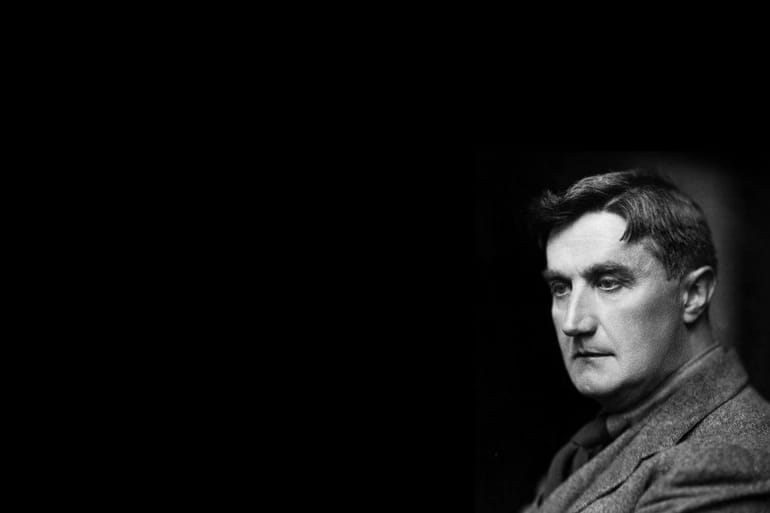
Ralph Vaughan Williams

Poetry. It’s simple, concise, and beautiful. And it has managed to inspire composers throughout history. Ralph Vaughan Williams’ The Lark Ascending is a perennial favorite, deriving emotion and inspiration from an old verse. It’s based on a lovely British poem from the 1880s that describes an English skylark in flight.

He rises and begins to round,
He drops the silver chain of sound,
Of many links without a break,
In chirrup, whistle, slur and shake.

For singing till his heaven fills,
‘Tis love of earth that he instils,
And ever winging up and up,
Our valley is his golden cup
And he the wine which overflows
to lift us with him as he goes.

Till lost on his aerial rings
In light, and then the fancy sings.

Poet George Meredith’s 122 lines of verse deeply moved composer Ralph Vaughan Williams shortly before World War I, nudging him to write a duet for violin and piano, with the violin taking on the flight of a skylark. Like the bird, the piece soars and dips. It was dedicated to violinist and good friend Marie Hall, who was enormously important with her suggestions of both the musical and technical aspects of a violin mimicking a wild bird in flight. In 1920, Vaughan Williams had the duet arranged for orchestra.

It’s now more famous than the old poem that inspired it, and to say that The Lark Ascending is popular is an understatement. At this very moment, ArkivMusic.com, the online CD and music service, currently has 76 recordings of Vaughan Williams’ gem in print.

Why is this work such a perennial favorite? The answer lies in sitting there and letting the violin envelop you. This is music that takes your breath away, giving the listener goosebumps and somehow managing to stop time.

The Ultimate 101NaturePoetryBritish MusicVaughan Williams
Written by:
Ray White
Ray White
Published on 11.17.2025
Loading...

MORE LIKE THIS

The Many Lives of the “The Flower Duet”

The Many Lives of the “The Flower Duet”

Explore the Flower Duet from Delibes' opera Lakme. Discover its use in TV, film, and creative remixes.

12/02/2025
Clara Schumann Returns to the Limelight

Clara Schumann Returns to the Limelight

Explore the life of Clara Schumann, a leading pianist of the Romantic era, who defied norms, balanced family and career, and whose work is gaining recognition.

09/17/2025
The Inspiration for Vaughan Williams’s “Fantasia on a Theme by Thomas Tallis”

The Inspiration for Vaughan Williams’s “Fantasia on a Theme by Thomas Tallis”

Explore the origins of Ralph Vaughan Williams's Fantasia, inspired by Thomas Tallis's melody from the 1567 psalm settings for Archbishop Parker's Psalter.

09/15/2025
The Ultimate 101LIVE ON AIR

The Ultimate 101

It’s the ultimate playlist, chosen by the ultimate experts, you!

Sep 15, 2025 - Sep 19, 2025
Opera’s Ultimate Five-Minute Interlude: The Meditation from “Thais”

Opera’s Ultimate Five-Minute Interlude: The Meditation from “Thais”

Explore the enduring appeal of Jules Massenet's "Meditation from Thaïs", a five-minute interlude that has become a beloved piece in the classical music repertoire.

09/19/2024
With Fall Upon Us, Discover the Poetry in Vivaldi’s “Four Seasons”

With Fall Upon Us, Discover the Poetry in Vivaldi’s “Four Seasons”

Explore Vivaldi's Four Seasons concertos, each inspired by a sonnet possibly penned by Vivaldi himself. Discover how each sonnet perfectly fits the music's rhythm.

11/04/2021